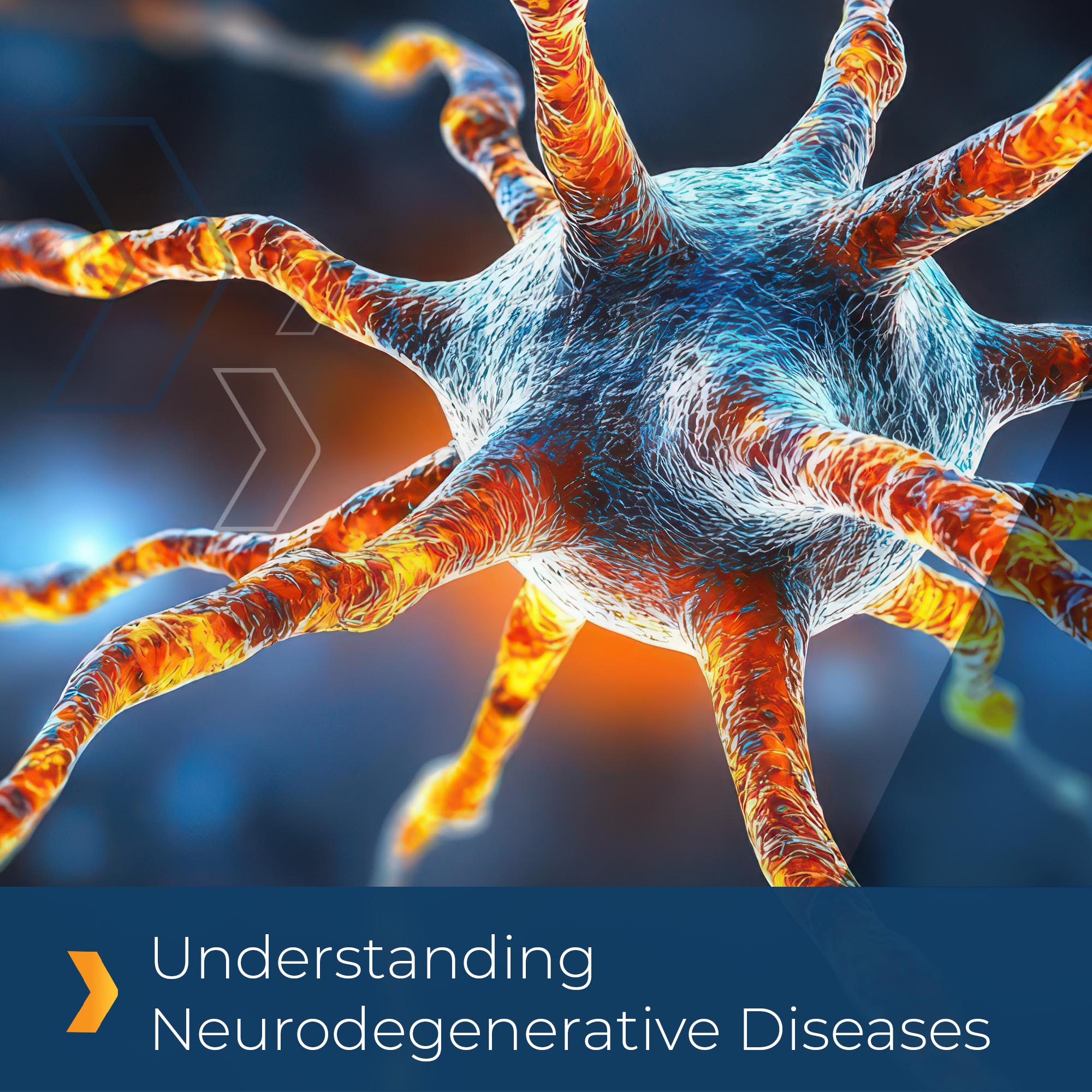
With approximately 86 billion neurons in the human body, this complex network of specialized cells can be likened to an electrical grid. Though the majority of these neurons are in the brain, they are interconnected throughout the body to transmit electrical impulses of information across the nervous system. This enables communication from different regions of the body and through the spinal cord and brain, like how electricity flows through a grid of power lines. But what happens when portions of the nervous system fail and what causes those failures? MRIGlobal researchers are working to better understand failure of these neurons and the neurodegenerative diseases that cause degeneration, while supporting the development of improved pharmaceutical treatments to help individuals combat them.
The Central Nervous System and Peripheral Nervous System The central nervous system (CNS) consists of the brain and spinal cord, which work together to process and transmit information throughout the body. The brain controls cognitive functions, emotions, and motor skills, while the spinal cord serves as a communication pathway between the brain and the rest of the body. This complex network receives sensory input, interprets it, and sends out motor responses to regulate bodily functions. It also plays a crucial role in maintaining homeostasis, coordination, and memory. Protected by the skull, spine, and cerebrospinal fluid, the CNS is vital for human survival and daily functioning.
The peripheral nervous system (PNS) consists of all nerves outside the CNS. It connects the CNS to the limbs, organs, and skin, facilitating communication between the body and brain. The PNS is divided into two main components: the somatic nervous system, which controls voluntary movements, and the autonomic nervous system, which regulates involuntary functions like heart rate and digestion. The autonomic nervous system is further divided into the sympathetic and parasympathetic nervous systems, which manage the body’s responses to stress and relaxation, respectively.
When the Nervous System Fails Neurodegeneration refers to the progressive degeneration of neurons across the nervous systems, generally beginning years or even decades before symptoms appear, often starting with subtle changes at the cellular or molecular level. These failures of the nervous system can be caused by various factors, sometimes with deleterious results. Neurological diseases like Alzheimer’s Disease, Parkinson’s Disease, Multiple Sclerosis (MS), and Huntington’s Disease are among the most well-known neurological diseases, in part because of their often-debilitating impacts. In addition, conditions like diabetes and stroke can also damage nerve cells. Environmental factors like vitamin deficiency, infections, and even exposure to toxins and pesticides can also impact the proper functioning of the nervous system.
Each of these conditions disrupts the normal functioning of neurons, leading to impaired communication between the brain, spinal cord, and body. These disruptions can potentially lead to a loss of muscle control, impaired sensation (numbness, tingling), difficulty moving, speaking, swallowing, breathing problems, vision changes, memory loss, cognitive impairment, seizures, and in severe cases, coma or even death, as the nervous system controls vital bodily functions like breathing and heart rate. The causes of nervous system failure are diverse, requiring different treatments and management approaches. Better understanding where and how this degeneration begins can be the key for researchers to target therapies for particular neurodegenerative disorders.
In the United States, people are likely most familiar with neurodegenerative diseases associated with the CNS – those affecting the brain and spinal cord – with approximately eight million people suffering from them. This includes approximately six million people with Alzheimer’s Disease, approximately one million people suffering from Parkinson’s Disease, and around 30,000 people suffering from Amyotrophic Lateral Sclerosis (ALS). These are progressive neurodegenerative disorders, meaning the neurons progressively degenerate and lose function. With many people, these diseases start early in life and develop slowly over many years. The more obvious symptoms are often only realized by the patient and those around them later in life, sometimes leading to disability and death.
Alternatively, neurodegenerative diseases of the PNS involve the progressive degeneration of peripheral nerves. These nerves are outside of the brain and spinal cord, connecting the CNS to the rest of the body, including muscles, organs, and skin. Their degeneration can lead to muscle weakness, sensory loss, and autonomic dysfunction. Surprising to some, approximately 20 million people in the United States are suffering from neuropathies associated with the PNS. Of those who are diabetic, approximately 28 percent also suffer from a resulting peripheral neuropathy. Further, 30-60 percent of patients who undergo chemotherapy suffer from peripheral neuropathy. Others who suffer from peripheral neuropathies can include those with autoimmune disorders like Guillain-Barré syndrome and Multiple Sclerosis, infections like Lyme disease, or those who abuse alcohol. While diseases associated with the CNS are probably more commonly observed by the public, those associated with the PNS are actually far more common. Read more about where and when diseases associated with the CNS and PNS, as well as the enteric nervous system (ENS), begin in “What Causes Neurodegenerative Diseases?”.
Symptoms in both the CNS and PNS can vary depending on which nerves are affected. Sensory nerve symptoms include numbness, tingling, burning pain, and sensitivity to touch, often in the hands or feet. Motor nerve symptoms can cause muscle weakness, atrophy, loss of reflexes, and difficulty moving limbs. Autonomic nerve involvement may lead to dizziness, digestive issues, heart rate abnormalities, and problems with sweating or blood pressure regulation. Additional symptoms can include allodynia (pain from non-painful stimuli) and muscle cramping.
Increasing Number of Neurodegenerative Disease Cases Per the World Health Organization (WHO), a study released 2021 shows that more than three billion people worldwide were living with a neurological condition. In fact, neurological conditions are now the leading cause of ill health and disability worldwide. More than 80 percent of neurological deaths and health loss occur in low- and middle-income countries, where access to treatment varies widely.
An increasing prevalence of neurodegenerative diseases in the past several decades can be attributed to several factors. As life expectancy rises due to modern medical advancements, more people live to older ages, which increases the likelihood of developing age-related and results in the manifestation of conditions like Alzheimer’s Disease and Parkinson’s Disease. Additionally, environmental factors such as pollution, poor diet, and sedentary lifestyles may contribute to disease development. Genetic predispositions also play a significant role, with many neurodegenerative disorders having hereditary components. Increased awareness and improved diagnostic capabilities have also led to more cases being identified.
Further, the (WHO) predicts that the number of people over 65 will at least double in the next 30 years, which means the number of people with neurodegenerative conditions will also likely continue to increase.
Where and When Does Neurodegeneration Begin? The onset of neurodegeneration occurs in specific areas of the brain or nervous system depending on the disease, with each disorder targeting different neuronal networks or structures. One of the most common symptoms associated with many neurodegenerative disorders is that many of the people suffering from them also have severe gastrointestinal issues. Years before the obvious symptoms like tremors in the hands of a Parkinson’s patient or prior to seeing any neurodegenerative effects of chemotherapy, many of these patients are dealing with constipation at as early as 30 or 40 years of age.
The enteric nervous system (ENS) in your digestive system is often called the “second brain” because of its complexity and ability to function independently. The loss, degeneration, or functional impairment of neurons in the ENS can lead to varied gastrointestinal disorders including constipation, while also potentially contributing to neurological conditions that develop later in life.
Improving Disease Outcomes Researchers today are often taking a different approach to targeting neurological disorders. In the past, researchers studying Alzheimer’s Disease were focused only on that disease. Today, there is broad understanding that there are common mechanisms to these neurodegenerative disorders, so collaboration is encouraged. There is also recognition that past studies on animal models don’t necessarily translate to humans, so there is a move to using models that better replicate human physiology. Read more about how researchers elsewhere are working to improve disease outcomes at “Can Exercise Reverse Neurodegeneration?”.
GETTING STARTED AT MRIGLOBAL Contact MRIGlobal for further information about our work to improve human health. Through a multidisciplinary approach, we provide customized research for commercial and government customers. This includes expertise in pharmaceutical sciences, health surveillance and diagnostics, and engineering.
SIGN UP FOR OUR NEWSLETTER Sign up for the MRIGlobal newsletter! It’s the best way to get the latest updates in the world of applied scientific engineering research delivered directly to your inbox.