
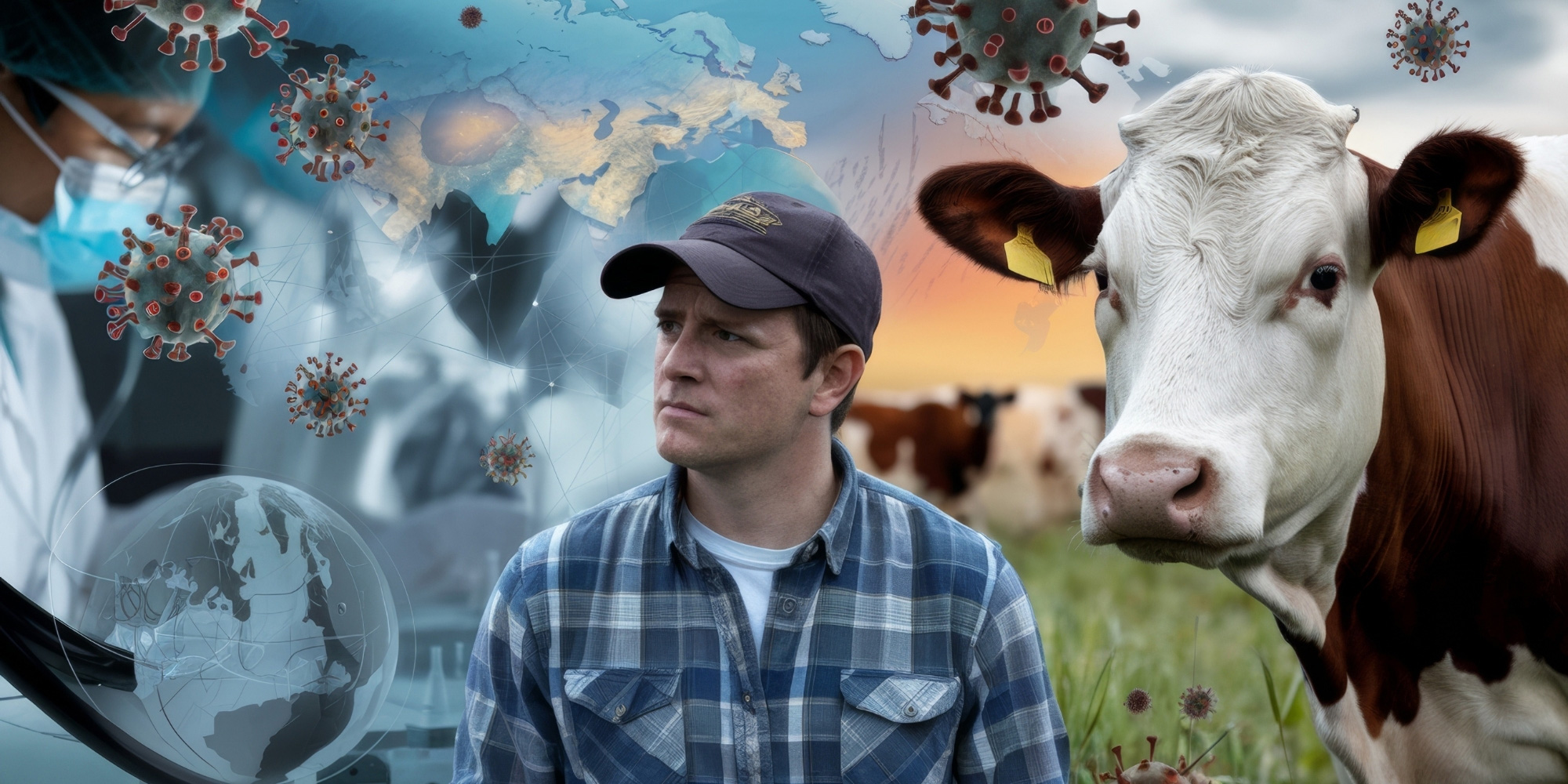
Research Consortium Urges Staying Ahead of Further Spillover
Kansas City, Mo.: (Aug. 5, 2025) – In a new Opinion paper in the Proceedings of the National Academy of Sciences titled “Three things we can do now to reduce the risk of avian influenza spillovers,” the authors call for three measures to radically lower the risk of a new influenza pandemic. These measures include (1) Improved wildlife, agricultural, and human sampling for One Health surveillance; (2) Accelerated implementation of new indoor air engineering standards (ASHRAE 241) and associated research on agent fate to significantly lower the potential for human respiratory infection; and, (3) Continued investments in animal and human vaccines along with improved public health communication that address the mechanisms of health disinformation campaigns.
Concern continues to grow over the global spread of highly pathogenic avian influenza (HPAI H5N1). Although the 70 reported human cases have mostly been mild, the virus has severely affected wildlife and livestock, with high poultry mortality and recent spillover into dairy cattle and pigs. These events have caused economic losses, food supply disruptions, and heightened biosecurity concerns.
“Applying lessons from past pandemics is key to preventing future pandemics. Leaning into our partnerships enhances communication and data sharing, each of which reinforce actions to lower the risk of a future H5N1 pandemic,” said Kenny Yeh, Senior Director and Research Fellow, MRIGlobal. “Wise investments will support the scientific community in the surveillance, early detection, and improved response to prevent a pandemic and the associated loss of lives and economy. Given the stakes, it’s imperative that we act quickly.”
“The return on investment for remaining vigilant for mitigating and understanding avian influenza cannot be overstated. Now is the time to keep up the research for understanding this evolving zoonotic system,” said Jeanne Fair, Ph.D., President and Chief Scientist at Global Conservation Institute, who fostered this work as an output of a September 2024 interagency workshop in Washington, D.C., which was cosponsored by MRIGlobal.
Authors included scientists from MRIGlobal, The Pennsylvania State University, University of Minnesota, University of Maryland, Fred Hutchinson Cancer Center, Georgia Tech Research Institute, Baylor College of Medicine, University of New South Wales, and Arizona State University.
# # #
About MRIGlobal
MRIGlobal is an independent, nonprofit research institute that delivers scientific and engineering solutions to improve lives, protect national security, and advance global health. Since 1943, MRIGlobal has performed customized research and development for government and commercial partners, including advanced diagnostics, chemical and biological threat detection and mitigation, engineering services, and mobile laboratory and transport solutions. Learn more at www.mriglobal.org.
CONTACT:
Mark Crouser, MRIGlobal
mcrouser@mriglobal.org
816-582-8839