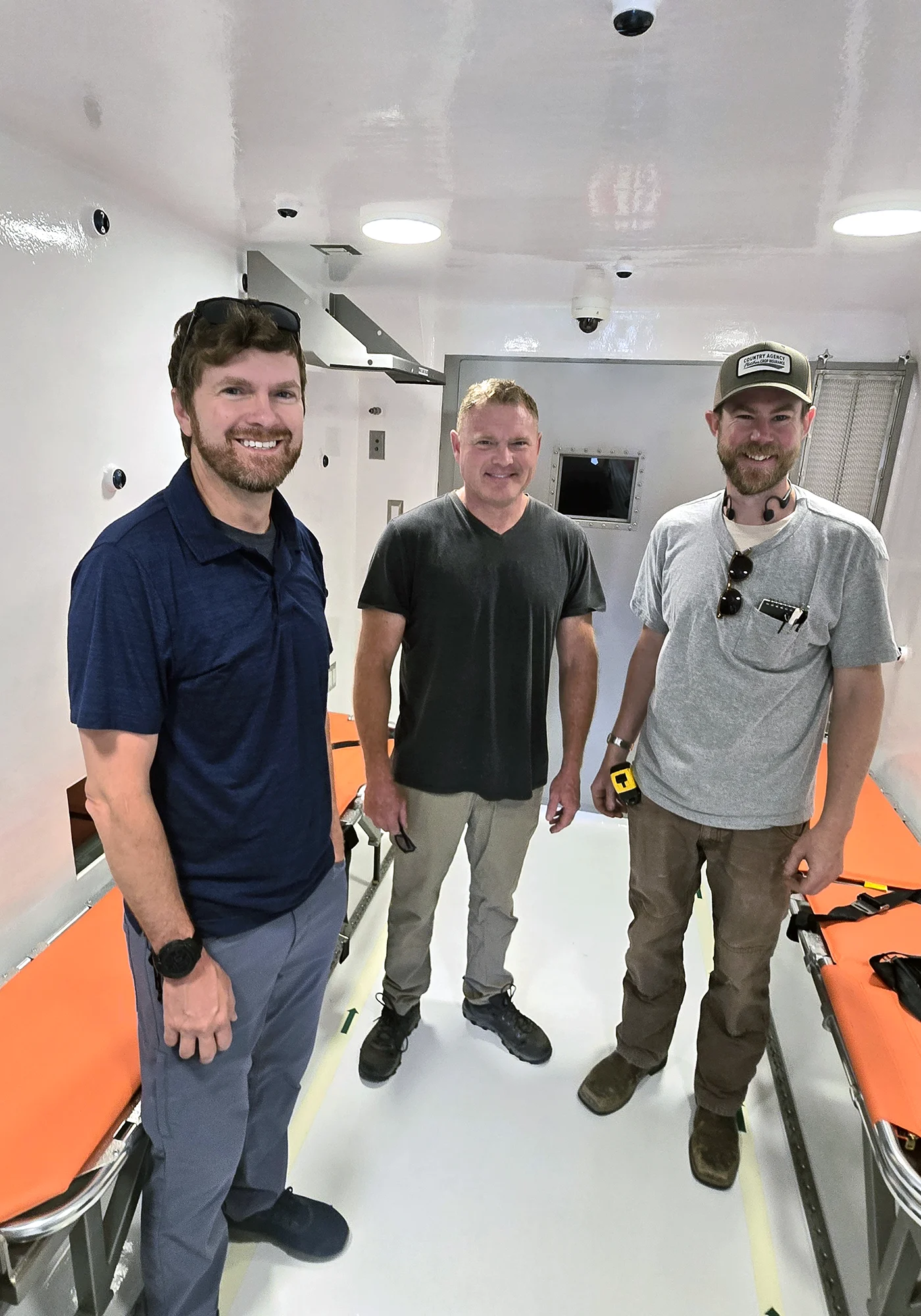
Portable Biocontainment Unit (PBCU)
Allows for isolation and biocontainment of highly pathogenic infectious disease patients
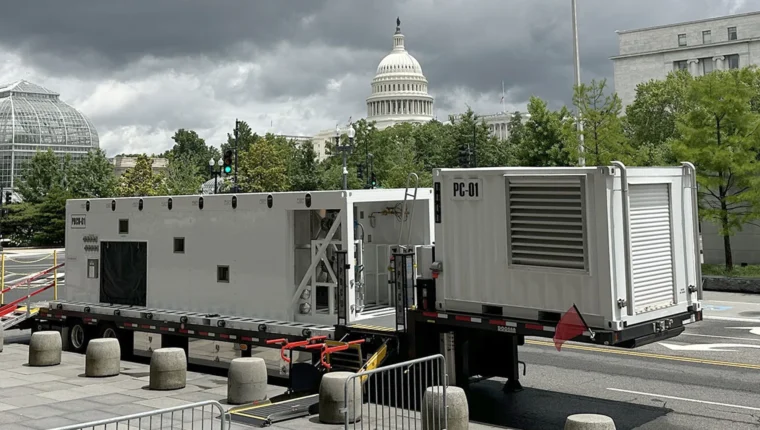
Biocontainment in patient transport is critical.
Recognizing this need, the U.S. Department of Health and Human Services’ (HHS) Administration for Strategic Preparedness and Response (ASPR) called on MRIGlobal to lead development of the Portable Biocontainment Unit (PBCU).
The PBCU is the first domestic resource for isolating and transporting patients with high-consequence infectious diseases via ground, air, and sea to specialized care facilities, serving as a necessary asset to the country’s ability to respond to these threats and protect global health. With the PBCU, the U.S. has the equipment needed to transport and care for patients with highly infectious disease, while protecting the medical staff and civilians.
What is the PBCU?
The PBCU allows isolation and transport of patients with highly infectious diseases.
- Built upon MRIGlobal’s decades of biocontainment experience
- Allows a full spectrum of critical care
- Uses vaporized hydrogen peroxide for thorough, post-deployment decontamination
- Maintains containment through emergency landings or mid-air rapid decompression events
Design Features
Unit can operate from the platform of large aircraft, including a C-130 or L-100, providing flexibility in where it can be deployed.
Can be loaded onto a customized trailer for ground operation and transit to a hospital for localized response to outbreaks or emerging biothreats.
Patients can be isolated inside the PBCU and continue to receive care, meaning that hospitals do not have to activate their biosecurity protocols in order to treat them.
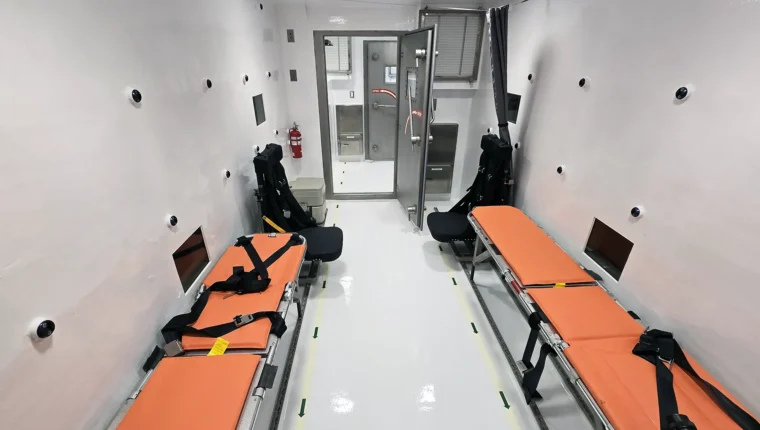
Unit has a separate patient room and medical staff room. Entire system is held negative to the cargo bay and all exhausted air passes through two-stage HEPA filtration to protect the transport crew.
Real-time pressure monitoring with audible and visible alarms verifies desired pressure differentials while an interior camera feeds interior and exterior video monitors for constant patient monitoring.
All interior walls are coated with a seamless epoxy coating formulated to ensure containment while surviving the thermal, mechanical, and chemical stresses introduced during loading, flight, decontamination, and emergency landing scenarios.