
Point-of-Need Diagnostics
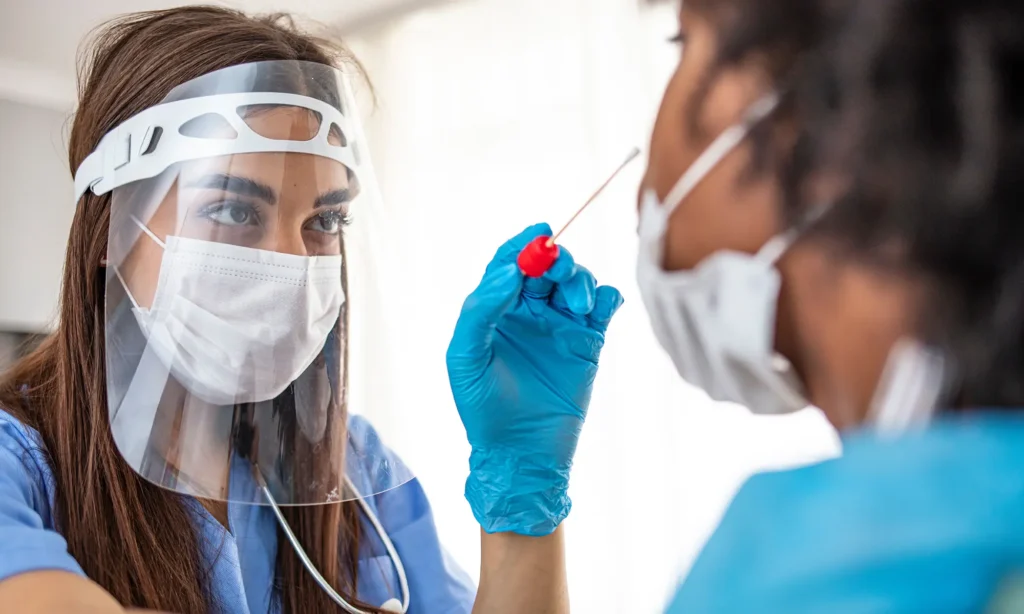
Have you ever swabbed inside your nose and used that sample to help diagnose if you have the flu or COVID-19? Or maybe you peed on a pregnancy test. The technology that makes those and other diagnostic tests like them possible is rooted in chemistry and enables people to manage their health from the privacy of their own homes. During the COVID-19 pandemic, you may remember working and schooling from home, and getting groceries and other necessities delivered, while riding out quarantine for the weeks and even months on end. And if we believed we or somebody in our household might have been ill with COVID-19, testing kits for SARS-CoV-2 were available to diagnose the illness at the point of need.
While “point of care” refers to testing at a doctor’s office or a clinic by a medical professional, “point-of-need” refers to testing that can be done without the supervision of the care professional, usually at home. It can also be done at airports to screen passengers getting on an airplane, members of the military in preparation for deployment, and anywhere there is a need for testing results in real time performed by either the patient themselves or another lay user. Using these tests, people know whether to go to a doctor’s office to seek treatment, self-isolate, or just drink lots of fluids and get rest, all while limiting exposure to others.